Seval Oz Visits OU
Smarter Roads, Smarter Future
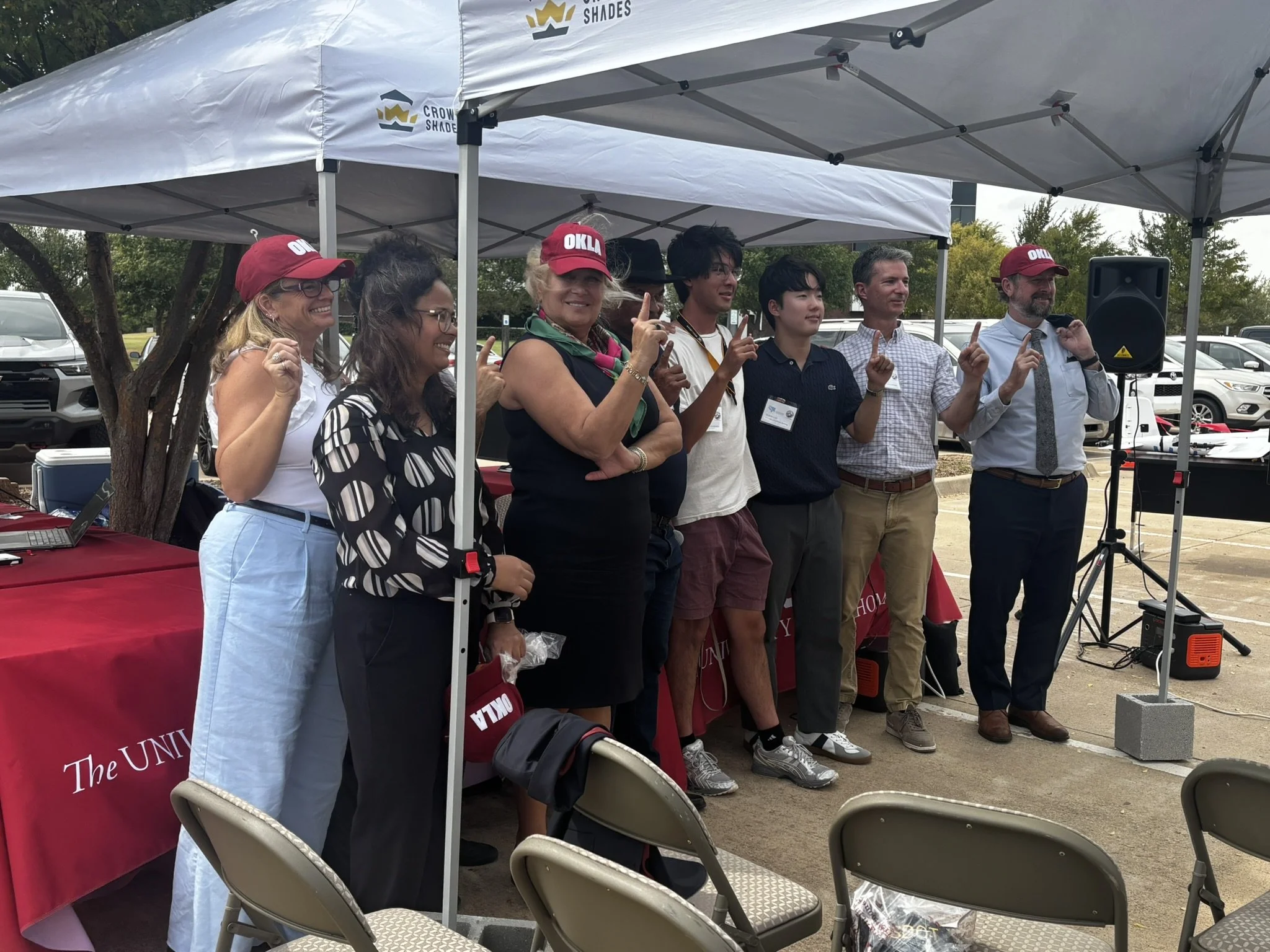
On September 29, 2026, several members of the United States Department of Transportation visited The University of Oklahoma. The delegation consisted of Seval Oz, Assistant Secretary for Research and Technology; Alasdair Cain, Research, Development, and Technology Coordination; Kelley Severns, Senior Advisor for Special Projects and Programs; and Mubassira Khan, Senior Scientist.
Southern Plains Transportation Center
The Southern Plains Transportation Center highlighted three projects for the USDOT. These projects included several from Cycle 1 - Rapid Assessment of Network-Level Pavement Conditions Using Novel Tools, Increasing Understanding of Weather Emergencies and Enhancing Safety of Different Communities Using Sensors and Human-Environment Interfaces Using Augmented Reality , and Next-Generation Permeable Pavement for Enhanced Durability and Functionality. SPTC also highlighted a Cycle 3 project - OpenRoad Link: A Public-Private Data Exchange for Safer, Smarter Trucking. Additionally, one project from Cycle 2 was featured: Assessing Wicking Geotextile for Enhanced Drainage and Stability in Highway Slopes: A Field Study in Central Texas.
Students also played an important role in the visit. Graduate students Khalida Muntasher presented her work on low-cost pavement microsurfacing, while William Masters presented his work on autonomous mowing to increase crew safety. The ODOT Design Squad and SPTC’s TRIP program showed SPTC’s student support efforts, as well as their workforce development program and the connections it has built with our industry partners.
ACCEL-RT
The ACCEL-RT team consists of members from the University of Oklahoma, the University of California at Berkeley, and the University of New Mexico. Each team highlighted their research for the USDOT, showing the future of autonomous vehicles of all types in rural settings.
For OU, this is the Mobility Intelligence Lab, or MiLa. The MiLa lab explores connected and autonomous vehicles, from sensors and path planning and tracking to road testing.
UC Berkeley’s work centers on autonomous drones for emergency response, such as for vehicle crashes, to assist first responders and emergency rooms with saving lives. Additionally, UC Berkeley along with the University of New Mexico are creating solutions like the Roadway Intelligence Service (RIS) for automated trucking to reduce delays and improve efficiency.